Every Child Needs a Mom and a Dad—and so Did Jesus, Part 2
Joseph
Integrity, Strength, and Safety: The Legacy of a Father
Joseph, although not the natural father [of Jesus], was the legal father and responsible for Jesus’ safety and well-being.
—Sharon Beth Brani—
Key point: The Gospel accounts of Jesus’ birth and early years demonstrate forcefully that even though Jesus was God in the flesh, He needed an earthly father. Every other child born into this world is unlike Jesus in that he or she isn’t, and never will be, God. Yet each one, like Jesus, needs a dad.
Go here for summaries of all the articles in this series.
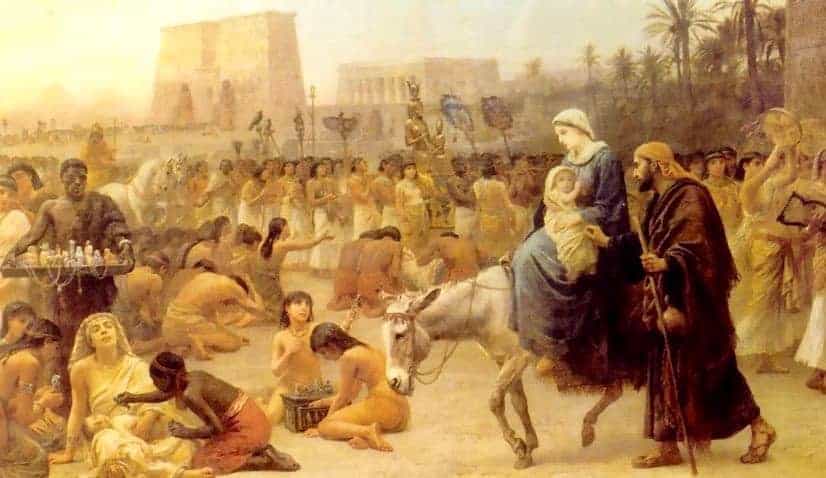
“Joseph! Get up and take Jesus and His mother to Egypt, and remain there until you receive further instructions! King Herod is out to kill him!” The tone of the angel’s voice—not just his words—carried a special sense of urgency.1 Joseph was asleep when he received this message, because the angel appeared to him in a dream; but the young carpenter, who now also was a new husband and father, wasted no time in heeding it. Matthew, the Gospel writer who penned the Christmas story from Joseph’s perspective, tells us Joseph “took the young Child and His mother by night and departed for Egypt,” and they stayed there until Herod had died. Then, significantly and somewhat surprisingly, Matthew added, “that it might be fulfilled which was spoken by the Lord through the prophet, saying, ‘Out of Egypt I called My Son.’”
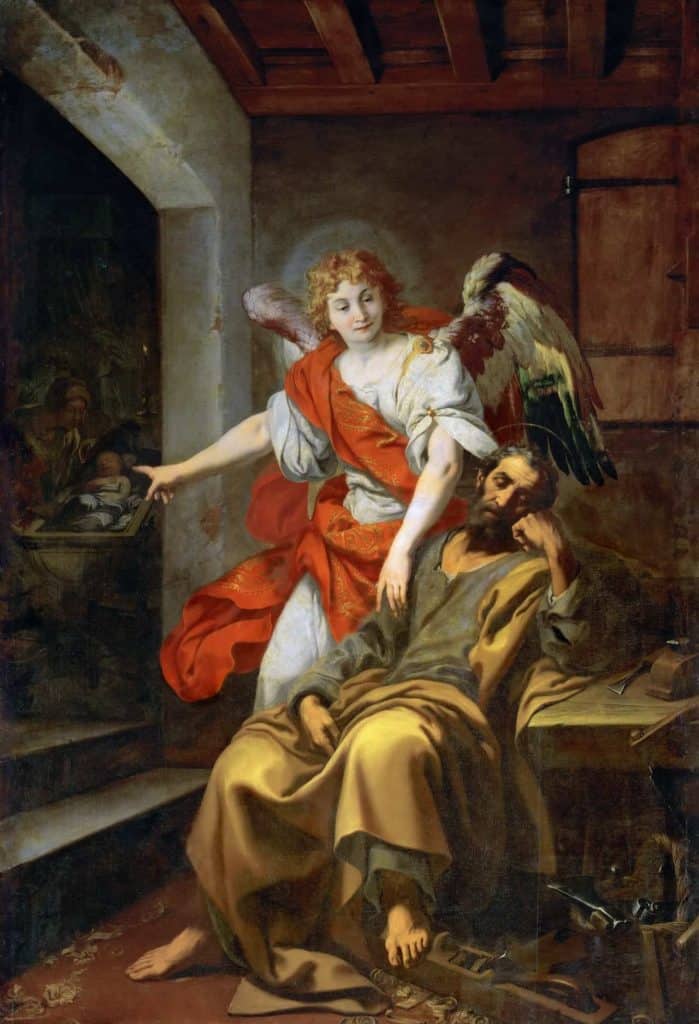
Dream of Flight by Daniele Crespi, c. 1625
A Prophecy Fulfilled
The passage Matthew quoted is Hosea 11:1:
When Israel was a child, I loved him,
And out of Egypt I called My son.
Noting that “Hosea 11:1…does not seem to be a prophecy in the sense of a prediction,” Bible scholar Louis A. Barbieri, Jr. observes that Matthew gave Hosea’s words a deeper understanding. Originally, Hosea was not speaking of—or was not aware that he was speaking of—the Messiah, but only of the nation of Israel. Matthew indicates that Hosea wrote of both. The Gospel writer
viewed this experience [of the flight to and return from Egypt] as Messiah being identified with the nation. There were similarities between the nation and the Son. Israel was God’s chosen “son” by adoption (Ex. 4:22), and Jesus is the Messiah, God’s Son. In both cases the descent into Egypt was to escape danger and the return was important to the nation’s providential history. While Hosea’s statement was a historical reference to Israel’s deliverance, Matthew related it more fully to the call of the Son, the Messiah, from Egypt. In that sense, as Matthew “heightened” Hosea’s words to a more significant event—the Messiah’s return from Egypt, they were “fulfilled.”2
Let us not miss the truth that God used Joseph to bring about the fulfillment of Hosea’s prophetic word. As significant as this was, it represents only a small portion of Joseph’s contribution to the Christmas story and to the life of Jesus, his adopted Son.
A Child-King Protected—in One Instance After Another
This wasn’t the only time Joseph received a divine message in a dream; it actually was the second of four. Here are all four instances. With the dreams, we mark the phases of Joseph’s journey and his contributions of leadership and strength to his fugitive family.
The First Appearance: “Go Ahead and Marry Mary”
20 But while he thought about these things, behold, an angel of the Lord appeared to him in a dream, saying, “Joseph, son of David, do not be afraid to take to you Mary your wife, for that which is conceived in her is of the Holy Spirit. 21 And she will bring forth a Son, and you shall call His name Jesus, for He will save His people from their sins.”
Luke 1:26-38 and Matthew 1:18-25 provide the context for this appearance. Having become engaged or betrothed to Mary, Joseph discovered she was going to have a baby. Mary hadn’t been unfaithful to Joseph but was pregnant by the Holy Spirit—a once-in-history occurrence. Joseph, however, did not know this, although he knew he wasn’t the father. Thinking Mary must have become pregnant by another man, Joseph resolved to call off the wedding; but as a righteous and caring man he didn’t want to make things any harder for Mary than they already would be. He decided to divorce her quietly.
Joseph was in for a surprise! As “he thought about these things, behold, an angel of the Lord appeared to him in a dream, saying, ‘Joseph, son of David, do not be afraid to take to you Mary your wife, for that which is conceived in her is of the Holy Spirit. And she will bring forth a Son, and you shall call His name Jesus, for He will save His people from their sins.”
All of this was happening, Matthew states, to fulfill Isaiah’s prophetic word that a “virgin shall conceive and bear a Son, and shall call His name Immanuel.” While Isaiah’s prophecy could have had an immediate fulfillment that didn’t involve a woman who never had been intimate with a man, it clearly had its ultimate fulfillment in Mary, who became pregnant as a virgin in the absolute sense.
Joseph not only married Mary, but he refrained from having sexual relations with her until after Jesus had been born. About this, Matthew is explicit. While only a few would understand this at the time, the details of this couple’s circumstances would testify that, without any question, Jesus had been born of a virgin!
The Second Appearance: “Flee to Egypt!”
Now when they had departed, behold, an angel of the Lord appeared to Joseph in a dream, saying, “Arise, take the young Child and His mother, flee to Egypt, and stay there until I bring you word; for Herod will seek the young Child to destroy Him.”
Luke 2:1-38 and Matthew 2:1-18 provide the context for this second angelic appearance to Joseph. Mary and Joseph had made their way from Nazareth to Bethlehem to participate in the census ordered by Caesar Augustus. Soon after they arrived in Bethlehem, the baby arrived. Angels told nearby shepherds about Jesus’ birth, and they made their way to the stable to pay homage to Him.
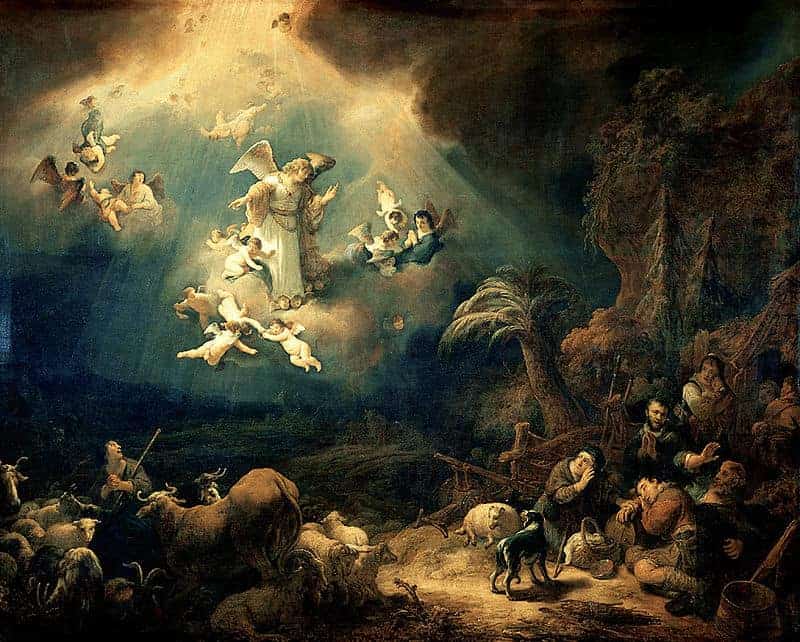
The Angel Appearing to the Shepherds by Govert Flinck, 1639
Eight days later, Jesus was circumcised and officially received His name. At least 41 days following His birth, Mary and Joseph took Him to the temple in Jerusalem to complete Mary’s purification ceremony. It was here that Simeon and Anna encountered Jesus, Mary, and Joseph.
After these events, the family made their way back to the place they were staying in Bethlehem. Probably several months after that, wise men, following a star, made their way to Jerusalem looking for the newborn King.
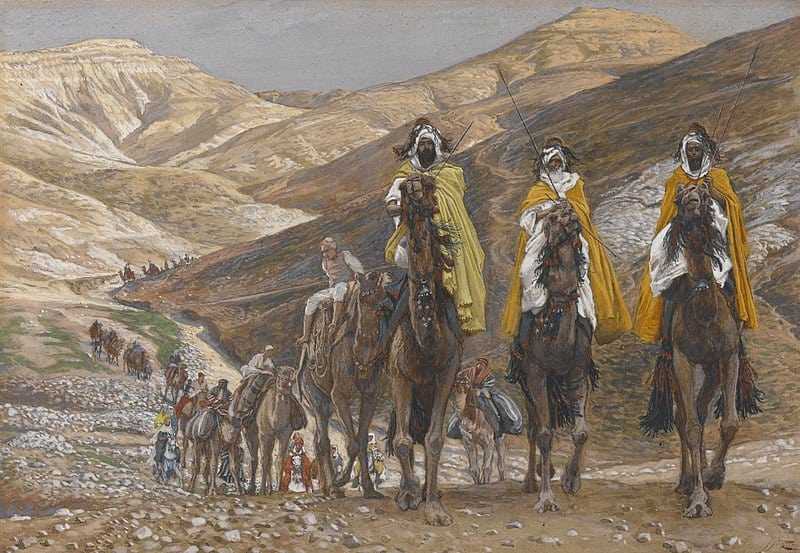
The Magi Journeying by James Tissot, c. 1890
King Herod heard of their search. He felt threatened by all the talk about a newborn king. Herod learned from Jewish scholars that Bethlehem was to be the place of the Messiah’s birth. He asked the wise men to return to him after they had found the new King so he could go and worship him as well. Needless to say, he was lying! With the aid of an especially bright star, the wise men found Jesus in Bethlehem, and they gave him expensive gifts. The wise men also received a divine message from God in a dream, one in which they were instructed travel home by a way that bypassed Herod. At this point, Joseph also was directed in his sleep to flee with his family down to Egypt.

The Flight to Egypt by Carl Spitzweg, 1875-79
The wise men heeded their warning, and when Herod realized he’d been ignored, he was livid. He arranged for all the boys in Bethlehem who were two years old and younger to be slaughtered. Talk about feeling threatened! With Herod’s massacre of the boys of Bethlehem, one of Jeremiah’s prophecies was fulfilled. The prophet had written,
A voice was heard in Ramah,
Lamentation and bitter weeping,
Rachel weeping for her children,
Refusing to be comforted for her children,
Because they are no more.
“Scholars” who have been reluctant to believe in the historical accuracy of the Bible have pointed out that no extra-biblical historian records Herod’s murderous tirade against the young boys of Bethlehem. Keep in mind, though, that the absence of a parallel account outside of Scripture does not mean the event did not occur. The truth is that this is exactly the kind of thing that Herod was known for, and it is reasonable to assume other similar actions on Herod’s part overshadowed his slaughter of innocent Bethlehem boys in historians’ accounts.
Originally, Jeremiah’s words referred to children’s deaths at the time of the Babylonian captivity centuries earlier. Once again, innocent children were perishing. Moreover, many thought of Rachel as Israel’s mother. She could not be comforted and wept without restraint.3
Against this backdrop, Joseph was told how he, in his specific situation, could most effectively do what men are divinely equipped to do for their wives and children—protect them from impending danger. Joseph obeyed, and considering that we’re talking about his protecting Jesus from life-threatening dangers, the importance of his role cannot be overstated. Thomas Aquinas (1225-1274) essentially acknowledged this, stating that Joseph was an essential part of God’s plan to send Jesus to earth as a human being, and a baby in particular. Had Mary not been married, she would have been stoned by the Jews. Moreover, Aquinas affirmed, in the years He grew from boyhood to manhood, Jesus needed the love, care, and protection that only a human father could give.
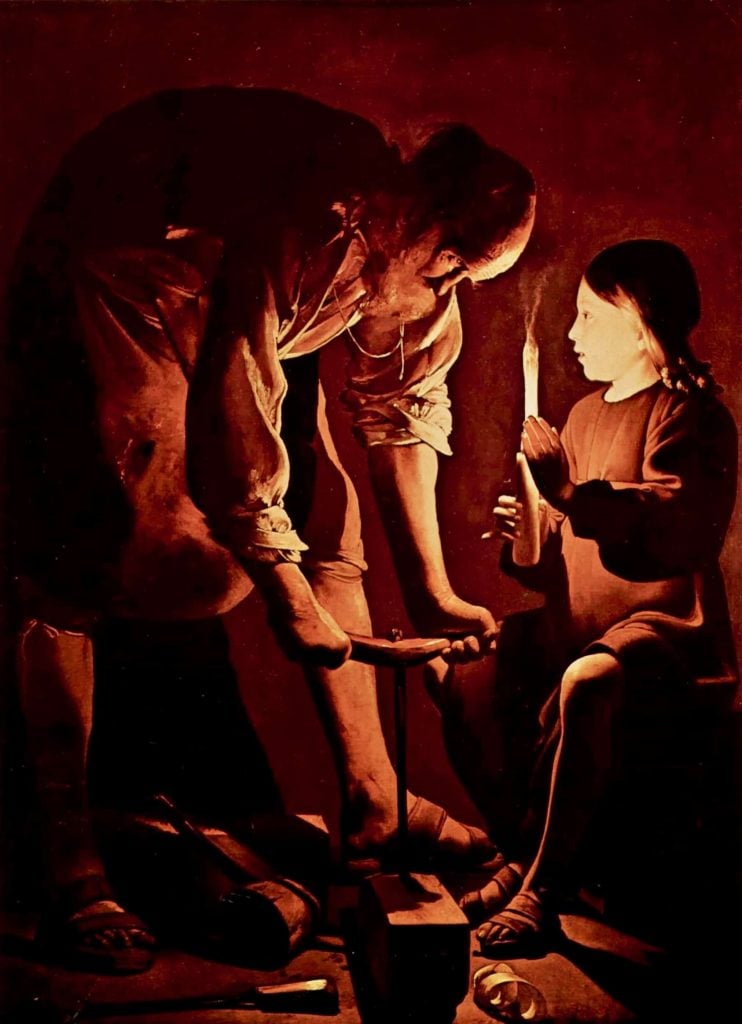
Joseph the Carpenter by Georges de La Tour, sometime in the 1640s
Joseph was told to do the very thing men are divinely equipped to do for their wives and children—protect them from impending danger.
The Third Appearance: “It’s OK to Return to Israel”
19 Now when Herod was dead, behold, an angel of the Lord appeared in a dream to Joseph in Egypt, 20 saying, “Arise, take the young Child and His mother, and go to the land of Israel, for those who sought the young Child’s life are dead.”
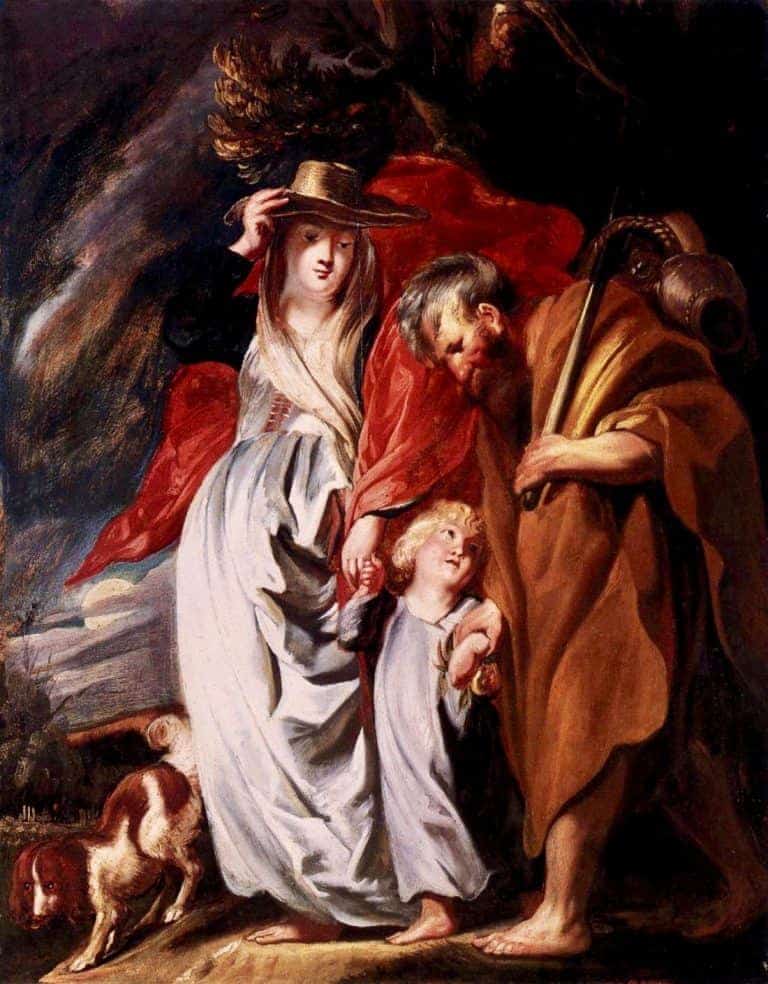
The Return of the Holy Family from Egypt by Jacob Jordaens, around 1616
The context for this appearance is Matthew 2:16-21. Feeling threatened by the recent birth of the One people were calling the “King of the Jews” and having become angry over the wise men’s failure to return to report to him, Herod, as we have noted, “sent forth and put to death all the male children who were in Bethlehem and in all its districts, from two years old and under, according to the time which he had determined from the wise men.” Because Joseph had heeded the angel’s warning and had fled with his family to Egypt, Jesus, and Mary as well, were safe. After Herod died in 4 BC, Joseph received divine instructions in a third pivotal dream. The angel told the man who had become Jesus’ father by adoption, “Arise, take the young child and His mother, and go to the land of Israel, for those who sought the young Child’s life are dead.”
How long did this special family stay in Egypt before returning to Israel? Putting the pieces together regarding Jesus’ age helps us answer this question. In all likelihood, the Savior was born between 6 and 5 BC, with a time frame of between 6 and 4 BC also possible. This timetable fits, if not with pinpoint accuracy, then loosely; one biblical historian says the family’s flight to Egypt likely took place 2 or 3 years before Herod died (in 4 BC) and that their stay in that land “must have lasted some years.” Certainly Mary, Joseph, and Jesus were in Egypt long enough for their departure to fulfill Hosea 11:1, the prophecy we cited earlier through which God declared, “out of Egypt I called my son.”
Once again, we see Joseph’s strength manifested in his protecting the members of his family, especially his adopted Son. We see his decisive leadership as well, a leadership that put the members of his family first and was dedicated primarily to their well-being. Joseph was a man fulfilling roles given to husbands and fathers by divine design.
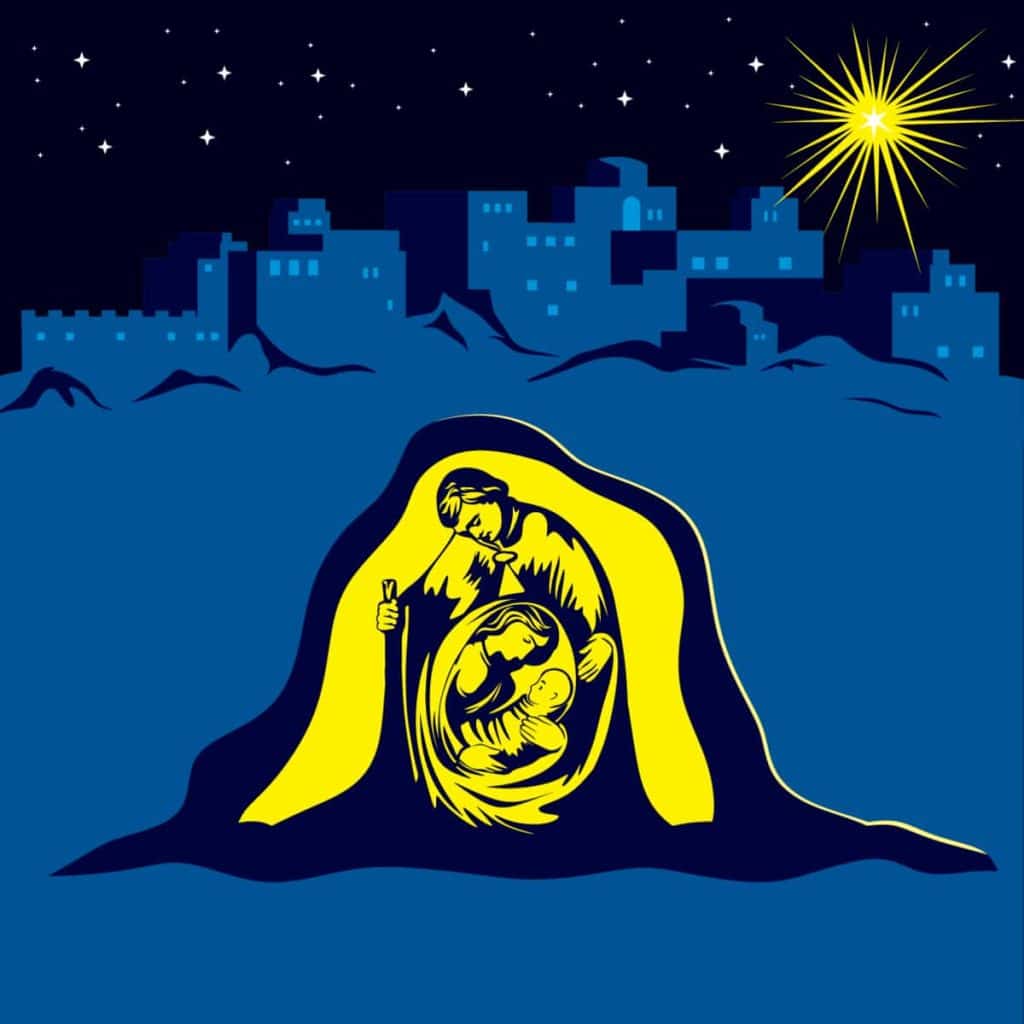
Lightstock
Joseph’s strength was manifested in his protecting his adopted Son. It also was manifested in his effective leadership, a leadership that put the members of his family first and was dedicated primarily to their well-being.
The Fourth Appearance: “Avoid Living too Close to Archelaus”
But when he heard that Archelaus was reigning over Judea instead of his father Herod, he was afraid to go there. And being warned by God in a dream, he turned aside into the region of Galilee.
Matthew 2:16-23 showcases the context for this, Joseph’s fourth angelic encounter. The danger had not completely subsided following Herod’s death. Herod’s son Archelaus ascended to the throne, and he, too, was exceedingly cruel. Wisely, having heard of Archelaus’s ascent to power and having received a divine warning in a dream, Joseph returned to Israel—but not to Bethlehem. Instead, he and Mary made their home in Nazareth, a town located in the region of Galilee in the northern part of Israel. This was Joseph’s hometown, the place from which he and Mary had traveled to Bethlehem just before Jesus was born.
The family’s moving to Nazareth fulfilled yet another Old Testament prophecy regarding the Messiah: “And he came and dwelt in a city called Nazareth, that it might be fulfilled which was spoken by the prophets, ‘He shall be called a Nazarene.’” These specific words
were not directly spoken by any Old Testament prophet, though several prophecies come close to this expression. Isaiah said the Messiah would be “from [Jesse’s] roots” like “a Branch” (Isa. 11:1). “Branch” is the Hebrew Word neser, which has consonants like those in the word “Nazarene” and which carry the idea of having an insignificant beginning.4
Born in a stable and placed in an animal’s feeding trough, Jesus, we can see, did have an insignificant beginning by conventional standards. However, appearances often deceive. He would grow up to live a sinless life and to offer Himself as a sacrifice that would pay the price for human sin. What Jesus would accomplish would be infinitely significant and consequential.
At this point we cannot help but connect the dots! Joseph was involved in Jesus’ life in ways that made it possible for his adopted Son to live beyond childhood. Thus, it’s difficult to see how Jesus’ adopted father’s role could have been any more significant than it was.
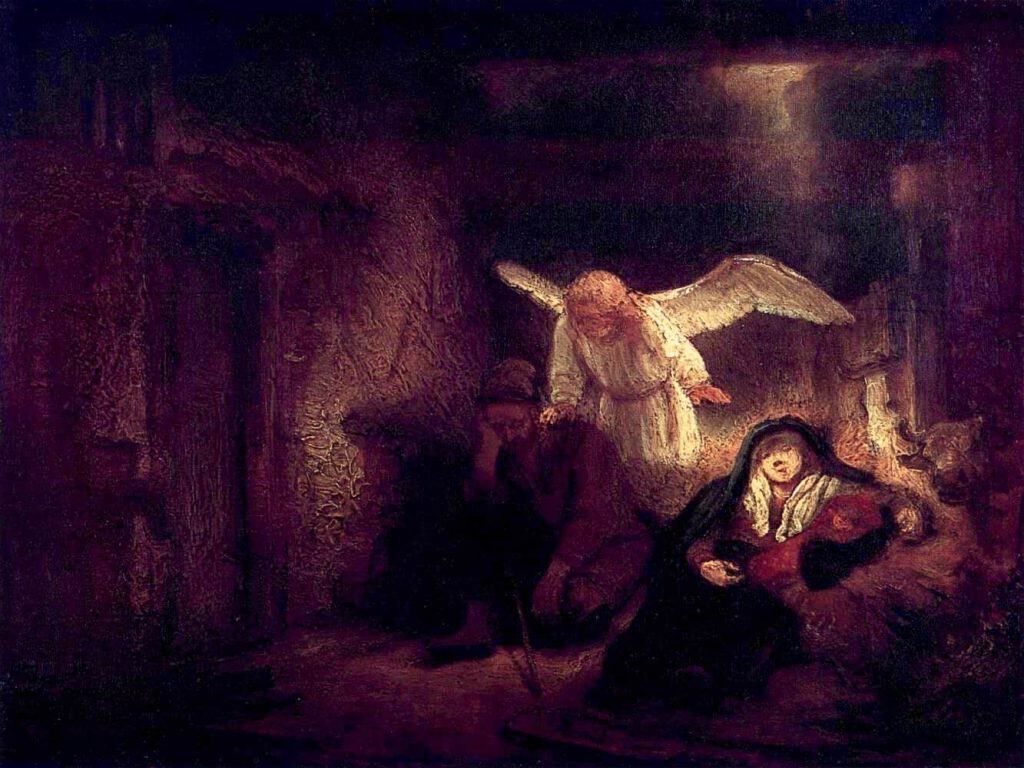
Joseph’s Dream by Rembrandt van Rijn, about 1645
Summary and Conclusion
In the New Testament, we hear only a tiny bit more about Joseph after he and Mary returned to Jerusalem in search of Jesus and found Him in the temple conversing with the teachers of the law. This information is contained in the first of these two statements made by Luke. Luke referred to both Mary and Joseph with the pronoun them. He also made an important but sweeping, general statement about the years that remained in Jesus’ life before He entered His public ministry. It would be the last thing Luke would write about Jesus’ youth.
51 Then He [Jesus] went down with them and came to Nazareth, and was subject to them, but His mother kept all these things in her heart. 52 And Jesus increased in wisdom and stature, and in favor with God and men.
What happened to Joseph between this event and the beginning of Jesus’ public ministry? Most likely, he died at some point during the “silent years” of Jesus’ life. Yet Joseph’s role in God’s plan to pave the way for the salvation of humanity is both critical and foundational. For starters, as we have said, Joseph’s actions protected Jesus from life-threatening dangers. Furthermore, it is crystal clear that “Joseph was a devout follower of the customs of his religion with his observance of Passover.…[It also is apparent that] Joseph made certain of good spiritual training for the children in his family. Joseph proved his integrity and willingness to be obedient to God’s direction and guidance.” Therefore, Joseph’s influence enhanced Jesus’ increase “in wisdom and stature, and in favor with God and men” (Luke 2:52).
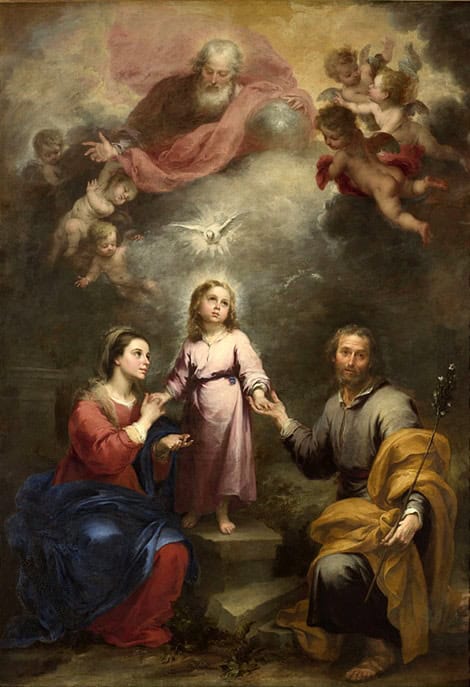
Holy Family with the Holy Spirit by Bartolomé Esteban Murillo, 1675-1682
That’s just the beginning. Much, much more can be said about both Mary and Joseph and what their roles in Jesus’ life imply about the needs of children everywhere, in every culture.
The events leading up to and surrounding Jesus’ birth demonstrate that even God’s Son needed a male and a female parent when He came into the world and during His early years. Although He was God, Jesus also was a human being who made His entrance into the world, not as a powerful king, but as a helpless baby—in the same way as all of us have made our entrances. Inherent to healthy journeys through babyhood, toddlerhood, and childhood—stages all people go through—are a mother’s loving nurture and a father’s protective strength. We readily acknowledge that in a fallen world not every child can have both of these positive influences. Even so, the Christmas story demonstrates that even Jesus needed them.
Inherent to healthy journeys through babyhood, toddlerhood, and childhood—stages all people go through—are a mother’s loving nurture and a father’s protective strength. We readily acknowledge that in a fallen world not every child can have both of these positive influences. Even so, the Christmas story demonstrates that even Jesus needed them. If He needed them, then so does every child.
If He needed them, then so does every child. To the greatest degree possible, individuals and society must work to affirm and uphold the essential contributions of both moms and dads in parenting—for the benefit of of both children and society at large.
Go here for summaries of all the articles in this series.
Copyright © 2017 by B. Nathaniel Sullivan. All rights reserved.
Unless otherwise indicated, Scripture has been taken from the New King James Version®. Copyright © 1982 by Thomas Nelson, Inc. Used by permission. All rights reserved.
Notes:
1A few dramatic liberties have been taken in this account, but the substance is true to the original.
2Louis A. Barbieri, Jr., “Matthew” in The Bible Knowledge Commentary, New Testament edition, John F. Walvoord and Roy B. Zuck, eds., (Victor Books, 1983), 22-23.
3Barbieri, 23.
4Ibid.
top image: In his painting Anno Domini (1883) British artist Edwin Long depicts the arrival of Joseph, Mary, and Jesus in Egypt.

Comments (0)