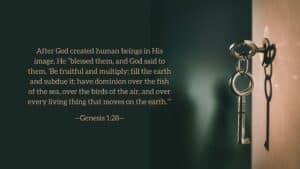
— Made in God’s Image, a 10-Part Bible Study Series —
What exactly does being made in God’s image mean? What are some of the practical implications?
An overview of this Bible study series is available here.
This article introduces part 3.
A teaching plan for part 3 is in the works.
Part 3 — Created to Be Free
The Biblical Doctrine of Humanity Compels God-Fearing Christians to Oppose Tyranny
Every man…is, of common right, and by the laws of God, a freeman, and entitled to the free enjoyment of liberty.
—Benjamin Franklin—
[T]he problem of the 1920s to the 1980s…is the attempt to have absolute freedom—to be totally autonomous from any intrinsic limits. It is the attempt to throw off anything that would restrain one’s own personal autonomy. But it is especially a direct and deliberate rebellion against God and his law.
—Francis Schaeffer in The Great Evangelical Disaster, published in 1984—
The end of law is not to abolish or restrain, but to preserve and enlarge freedom.—John Locke in Two Treatises of Government, published in 1689
If spiritual liberty calls upon its pious votaries to extend their views far forward to a glorious hereafter, civil liberty must at least be allowed to secure, in a considerable degree, our well-being here. And I believe it will be no difficult matter to prove, that the latter is as much the gift of God in Christ Jesus as the former, and consequently, that we are bound to stand fast in our civil as well as our spiritual freedom.
Jacob Duché, a clergyman from the colonial era of America who prayed the first prayer in Congress on September 7, 1774, in a sermon titled “The Duty of Standing Fast in Our Liberties,” which he preached on July 7, 1775
Key point: Where are the pastors willing and working to proclaim the truth on the front lines of a war in which lies appear to be winning?
Article, Part 3:
God’s making people in His image means, among other things, that He created people to reflect His character, yet to be free within the boundaries of the commands He would give them, all of which are consistent with His character. At the same time, God is a God of order and expects people to maintain order as they fulfill their divinely assigned tasks. In fact, as people obey the cultural commission, they bring order and purpose to situations that would be chaotic without human influence. This is not to say that human influence is perfect but that obedience to God is decidedly beneficial to both people and situations.
Getting the Big Picture of Reality Is a Key Factor in Affirming the Existence of Absolute Truth and Understanding Authentic Liberty
[T]he problem of the 1920s to the 1980s…is the attempt to have absolute freedom—to be totally autonomous from any intrinsic limits. It is the attempt to throw off anything that would restrain one’s own personal autonomy. But it is especially a direct and deliberate rebellion against God and his law.
—Francis Schaeffer in The Great Evangelical Disaster, published in 1984—
The end of law is not to abolish or restrain, but to preserve and enlarge freedom.—John Locke in Two Treatises of Government, published in 1689
View summaries of all the articles in this series here.
In a Family TalkTM booklet titled Discipline, Dr. James Dobson relates a story loaded with lessons for us today. Countering the idea that parents and their children should “be on an even playing field—making decisions by negotiation and compromise,” Dobson recalls observing his daughter’s pet hampster fidgeting in his cage, anxiously trying to escape. The little guy
worked tirelessly to open the gate and push his furry little nose between the bars. Then I noticed our dachshund, Siggie, sitting eight feet away in the shadows. He was watching the hamster, too. His ears were erect, and it was obvious what was on his mind. He was thinking, Come on, baby. Open that door, and I’ll have you for lunch. If the hamster had been so unfortunate as to escape from his cage, which he desperately wanted to do, he would have been dead in a matter of seconds.

Dobson goes on to discuss the difference between the hampster’s perspective and his own: “I was aware of dangers that he couldn’t have foreseen. That’s why I denied him something that he desperately wanted to achieve.”
In this respect, children are like that hampster—but so is everyone else in the human race, regardless of age, before he or she is willing to acknowledge the big picture offered by “Nature and of Nature’s God,” to quote the the Declaration of Independence.

But wait! The Declaration does not just speak of “Nature and of Nature’s God,” but of “the Laws of Nature and of Nature’s God” (emphasis added). What? In the Declaration of Independence? Yes! Our founders got it right. True freedom and liberty—on both personal and societal levels—can be established and maintained only when individuals and society affirm “the Laws of Nature and of Nature’s God,” or absolute truth. Dr. Dobson’s perspective in relation to his daughter’s hamster parallels the one we need with regard to the world, life, and the universe.
True freedom and liberty—on both personal and societal levels—can be established and maintained only when individuals and society affirm the laws of nature, or absolute truth.
No One Really Believes Truth Doesn’t Exist
Even a relativist has to admit that some truths and falsehoods exist.
- He knows he’s wearing a blue shirt and not a red one.
- She lives in Texas, not in Vermont.
- Go through a traffic intersection when you approach a green light, not a red one.
Truths and falsehoods in the moral and spiritual realms exist, too. These also are evident, but we don’t recognize them with physical senses like seeing and hearing—and they often are even more consequential than realities in the physical realm.
True Freedom Is Found In a Recognition of Absolute Truth
In their book on apologetics for high schoolers titled Don’t Check Your Brains at the Door, Josh McDowell and Bob Hostetler expose 42 myths that have become quite popular in today’s culture. One of them is the “Anarchist Myth.”1 To expose this false belief for the lie it really is, McDowell and Hostetler tell a story. The story also is available online.
Herman, the son of a crab named Fred, was growing rather weary of what he believed to be the confinement imposed on him by his shell. “Hey, Dad! This shell is really boxing me in,” said Herman. “I can’t take it anymore! I want my freedom! My friends and I have been talking, and they feel the same way. Some of them are thinking about forming a group called ‘Crabs for Shedding Shells.’ I’m ready to help!”
“Son,” said Fred to his boy, “I understand your frustration. I know it’s easy for you to think your shell is denying you freedom and that you could move around unencumbered if you only could get rid of it—but let me tell you a story.”
“Aww, Dad, come on. I’m too old for that!” complained Herman.
“Now, hear me out,” replied the elder crab. “I think this will make a lot of sense to you. My story is about
Humphrey the human, who insisted on going barefoot to school. He complained that his shoes were too confining. They cramped his style, he said. He longed to be free to run barefoot through fields and streams. Finally, his mother gave in to him. He skipped out of the house barefoot. Do you know what happened?”
Herman opened his mouth, but his father continued before he could answer.
“Humphrey the human stepped on pieces of a broken bottle. His foot required twenty stitches, and some other guy took his girl to the prom while Humphrey sat home watching reruns of Flipper.”
“That’s a pretty lame story, Dad,” Herman said.
“Maybe, Son, but the point is this: Every crab has felt this way at one time or another, thinking life would be better if he could be completely shell-free. But that’s like a sailor getting tired of the confinement of a ship and jumping to freedom in the sea. He may think that’s freedom, but if he doesn’t get back to ship or shore, he’ll drown and end up as crab food. What kind of freedom is that?”
Fred explained to Herman that one day in the not-too-distant future, he indeed would discard his shell. The process, called molting, is a normal part of a crab’s growth into adulthood. “But don’t be fooled,” Fred warned his son. “After your old shell comes off, you’re going to be especially vulnerable. It’ll be a dangerous time. You’ll need to be more careful than ever until your new shell hardens.” Fred tapped his son’s exterior shield a couple of times and then summarized his main point. “The truth, Herman, is that without a protective shell, life will be far more confining than liberating.”
Both the irony and the reality of the situation were beginning to dawn on Herman. After thoughtful reflection, he turned to his dad and said,
“You mean that some things may seem to limit freedom but really make greater freedom possible?”
Fred smiled broadly and patted his son on the back with a mammoth claw. “How’d you get to be so smart, Son?” he asked.
Corporate Liberty Depends on the Affirmation of a Supreme Authority
“The laws of nature and nature’s God” are like Herman’s shell. Coming back now to the larger picture, we note that as a nation, if we don’t return to these, we will lose our liberty. Does everyone have to become a Christian in this nation for America to restore and maintain liberty? No, not everyone was a Christian even at America’s founding, although most were. People believed in God, however, and that was key. In particular, the Founders held beliefs “rooted in the Judeo-Christian values found in the Bible.”
While we might not be able to convince our secular friends and neighbors of the existence of God right off the bat (even though we certainly need to know and be able make the case for God’s existence), if we can help them see the connections between law, liberty, and belief in a divine being, that will be a good first step.
Note:
1Josh McDowell and Bob Hostetler, Don’t Check Your Brains at the Door: Know What You Believe and Why, (Dallas: Word Publishing, 1992), 179-182.
What makes the United States of America special? What makes it extraordinary? I posed this question to one of my children recently, and I encouraged her never to forget what I was about to tell her.
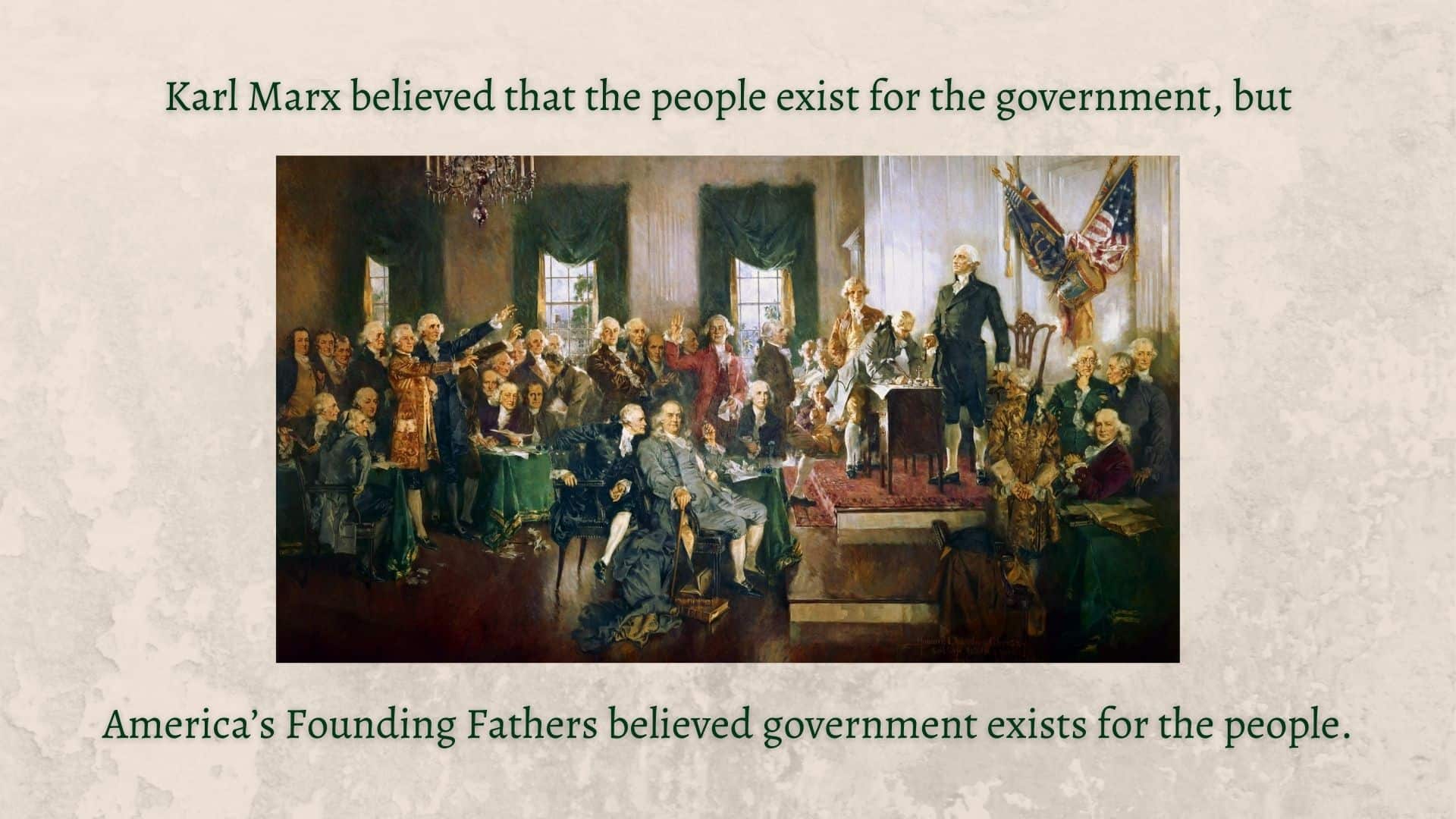
A primary reason the United States is unique, I said, is this: It was founded on the ideal that the government exists for the people. Ordinarily, nations are formed on the premise that the people exist to serve the government.
Karl Marx, whose ideas were influential in the Russian Revolution and the founding of the USSR, among other nations, is a prime example of one who believed, not just that the people exist for the sake of government, but that exercise of religious faith in a nation hinders and weakens the all-important state. If you don’t believe me, read some of the statements Marx himself made about politics and government.
The Founders’ Perspective on the Purpose of Government
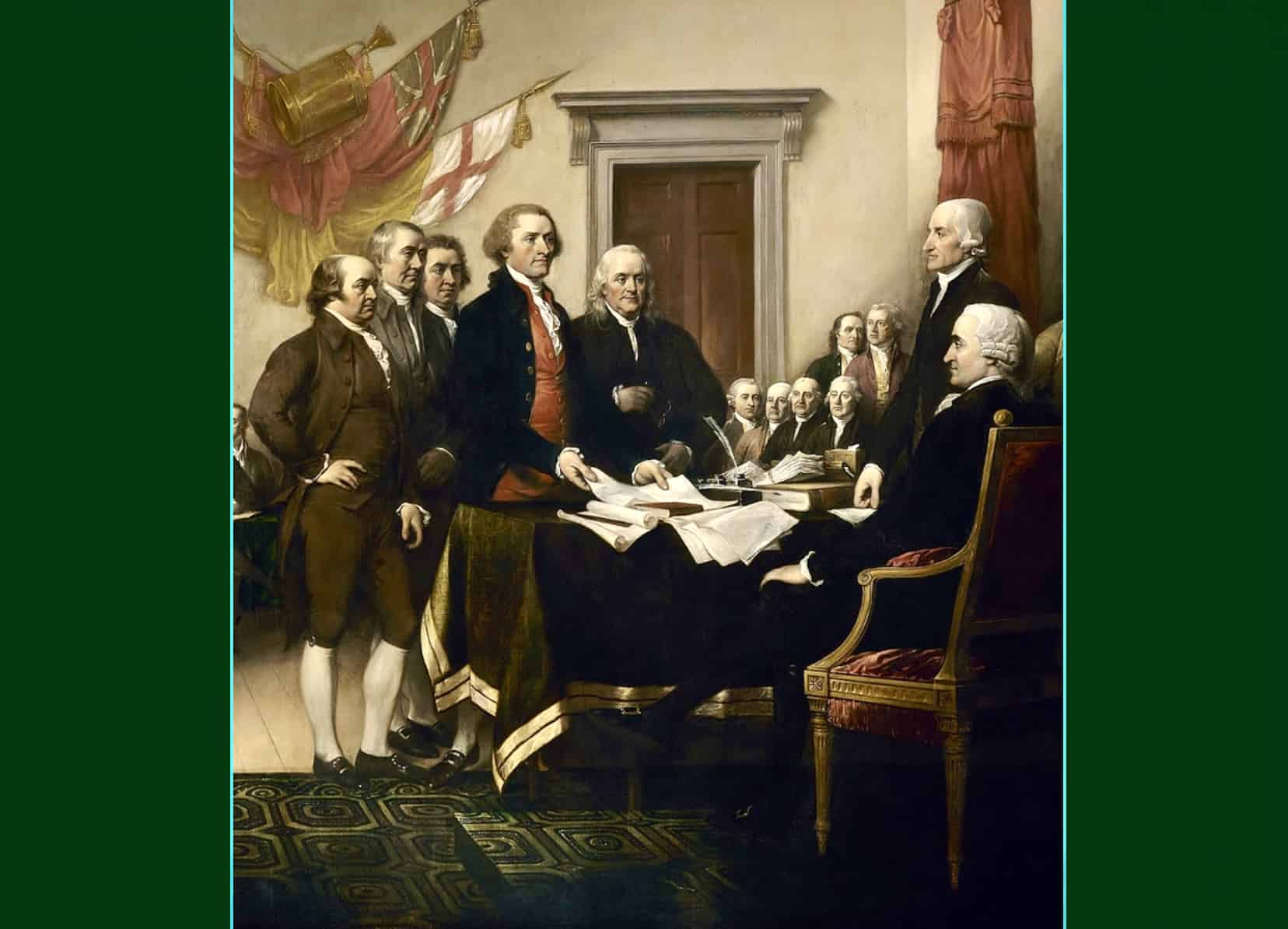
The Founders of the United States of America did not leave anyone to wonder what they believed was and is the purpose of government. They spoke with clarity and conviction. Further, they laid everything on the line and sacrificed a great deal to uphold what they believed. In the Declaration of Independence, they said,
John Trumbull / The Declaration of Independence
We hold these truths to be self-evident, that all men are created equal, that they are endowed by their Creator with certain unalienable Rights, that among these are Life, Liberty and the pursuit of Happiness. — That to secure [protect] these rights, Governments are instituted among Men, deriving their just powers from the consent of the governed [emphasis added], —
Moreover, they went on to add,
That whenever any Form of Government becomes destructive of these ends, it is the Right of the People to alter or to abolish it, and to institute new Government, laying its foundation on such principles and organizing its powers in such form, as to them shall seem most likely to effect their Safety and Happiness.
Note these important observations.
-
- First, the Founders acknowledged God. The God they spoke of and wrote of was and is the God of the Bible.
- Second, they acknowledged God as Creator.
- Third, they affirmed, however implicitly, that human beings are special among God’s creation in that they possess “unalienable” or innate rights — rights that are theirs by virtue of the fact that God created them as people.
- Fourth, they therefore believed that unalienable rights find their source in the reality that God created human beings in His own image (go here and here).
- Fifth, it was the Founders’ conviction that government has a God-given duty to protect the rights of its people so that they can freely exercise those rights. The rights they upheld are not favors the government is to perform for anyone; nor are they gifts the government gives. God alone gave, or “endowed” human beings with rights, rights that include (as the Founders so powerfully expressed), “Life, Liberty and the pursuit of Happiness.” These are rights the people enjoy when they take the initiative to exercise them. It is the government’s job to stay out of the people’s way — and to make sure that citizens do not interfere, either. Significantly, when government protects unalienable rights, it simultaneously is fulfilling its biblical duty to maintain order by rewarding or to commending those who do right and by punishing those who do wrong (see Rom. 13:1-7; 1 Pet. 2:13-17; 1 Tim. 2:1-4).
- Sixth, in light of the above realities, we cannot escape the conclusion that law and liberty are inseparably intertwined. In other words, ordered liberty cannot exist for any significant length of time without a respect for the law.
- Seventh, a nation can be free (and remain free) only when it understands that civil liberties are rooted in a recognition of God as Creator and of people as having been created in His image and accountable to Him. This makes government accountable to God as well.
The rights the Founders of America upheld are not favors the government is to perform for anyone; nor are they gifts the government gives. God alone gave, or “endowed” human beings with rights, rights that include (as the Founders so powerfully expressed it), “Life, Liberty and the pursuit of Happiness.”
The Rights of Men Are Rooted in Human Uniqueness
Intertwined with law and liberty are unalienable rights — and these, as we said in item 4 above, are rooted in the reality that God makes human beings in His own image. In a previous Word Foundations article, we cited 31 traits that set human beings apart from the rest of God’s created order. We also previously discussed God’s cultural commission to humanity. God has instructed human beings to steward His creation in responsible, resourceful, and productive ways (see Gen. 1`:28). People cannot fully reflect God’s image, nor can they adequately fulfill the cultural commission God gave them, without being free to exercise their God-given, unalienable rights. The title of this post emphasizes this. People have been Created to Be Free! Not free in the sense of being able to do anything they get an urge to do, but free to fulfill their God-given purpose.
People cannot fully reflect God’s image, nor can they adequately fulfill the cultural commission God gave them, without being free to exercise their God-given, unalienable rights.
We come now to the main point of this article. Tyranny and tyrants thwart God’s plan for humanity because they hold false ideas about God and human beings. They therefore distort the purpose for which people were created by God. They stand opposed to legitimate expressions of God’s image in human beings and in human activity.
Because of all of this, tyranny and tyrants must be opposed. Opposing them is biblical. It is Christian. It aligns with the church’s duties to uphold the truth about God and humanity, to worship God only, and to make disciples. We can put it this way. Opposing tyranny involves upholding biblical teachings about creation, humanity, and God’s image as reflected in men, women, boys, and girls.
This means opposing government mandates that violate unalienable rights, including vaccine and mask mandates. It means supporting religious exemptions for those who resist taking the COVID vaccine because doing so would violate their consciences.

Lightstock
Where are the preachers who will uphold human dignity as taught in Scriptures and support the conscience rights of Christians, as my friend Pastor Sam Jones has done? Tyrants do not respect those rights, despite, or perhaps even because, they are God-given!

Jean Leon Gerome Ferris / 1900 / Benjamin Franklin
Does a pastor have to address every such issue from the pulpit? No, but if not from the pulpit, surely there are times and settings that churches can offer for addressing issues like this. Pastors must lead! I ask again — Where are the pastors willing to speak out against tyrants and tyranny? America needs them as much or more than she needed them at the time of her beginning! In the early days of America as an independent nation — fortunately — she and her leaders were ready and willing to stand.
Benjamin Franklin was an extremely influential Founding Father. Here was his design for the Great Seal of the United States. It depicts Moses leading the Israelites through the Red Sea as the Egyptians chased them. Printed on the proposed seal is this statement:
REBELLION TO TYRANTS IS OBEDIENCE TO GOD.
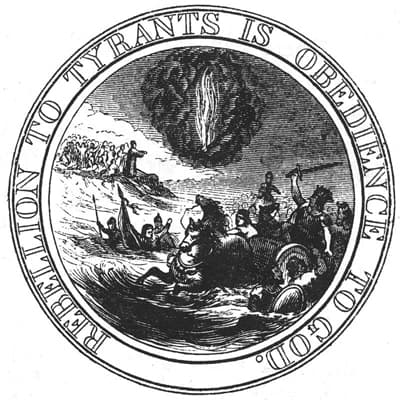
Can we as Christians please take a cue from Franklin? Can the pastors of our churches take a cue from him?
Failing to Uphold the Biblical Doctrine of Man
Unfortunately, in our day, even many so-called “conservative” pastors who should know better are failing to uphold biblical teachings about how and why human beings are special. In this video from the Family Research Council (FRC) posted February 18, 2022, FRC President Tony Perkins and theologian Owen Strachan discuss the problem without naming anyone. Here is an audio clip from their discussion. Note that to Dr. Strachan, and to Tony Perkins as well, this is both a biblical and theological issue.
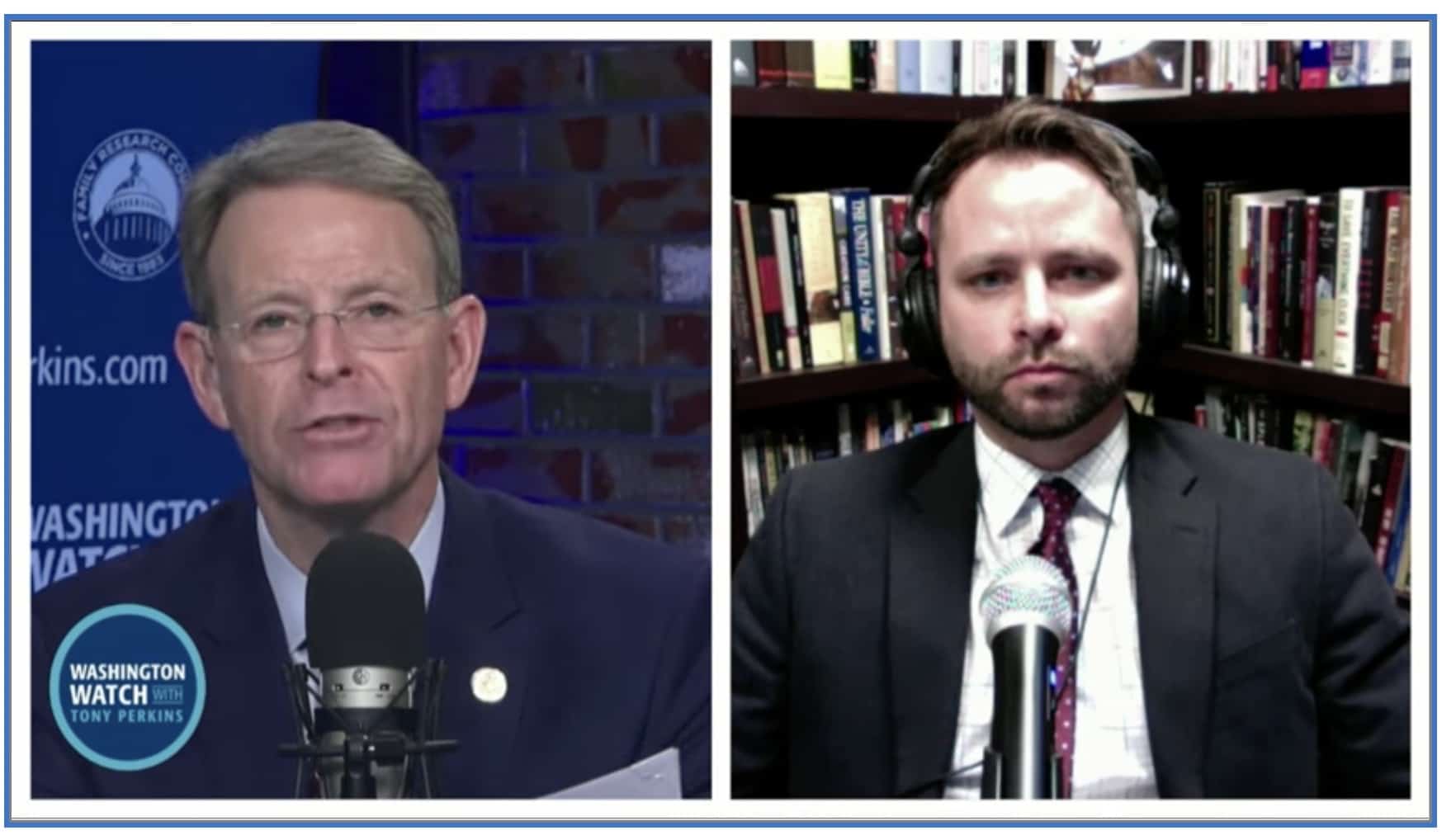
Family Research Council / You Tube
As you’ve heard if you listened to the clip, Perkins and Strachan talk about a conservative Baptist pastor who refuses to provide documentation for religious exemptions for the COVID vaccine.

Robert Jeffress / firstdallas.org
Here is a copy of the Associated Press article Mr. Perkins cites. Mr. Perkins didn’t want to name anyone, but I will. Robert Jeffress, pastor of First Baptist Church in Dallas, Texas, is the Baptist leader who refuses to acknowledge the conscience rights of the believers he leads. I believe he has failed to present the “whole counsel of God.”
Note that at the end of the above clip, Tony Perkins asks what will be next if we surrender on vaccine mandates. Indeed. Dr. Strachan responded well: “Totally!”
Here’s how serious this is. If we won’t uphold biblical teachings that emphasize that human beings are special because God made them in His image, we effectively will have surrendered essential biblical arguments for natural marriage, for opposing abortion, and for advocating everything the Bible teaches about human sexuality. And that’s just for starters.
If we won’t uphold biblical teachings that emphasize that human beings are special because God made them in His image, we effectively will have surrendered essential biblical arguments for natural marriage, for opposing abortion, and for advocating everything the Bible teaches about human sexuality. And that’s just for starters.
The Cost of Shunning God-Given Duties — and the Importance of Reasserting Them
I strongly believe that when pastors refuse to educate their churches about the nature of man and refuse to call government to account for violating unalienable rights, they neglect their duty to faithfully uphold the biblical doctrine of man (humanity, all human beings). No wonder tyrants are seizing and tightening their grip on power in the United States! Despots are not being reminded that they are accountable to God.
As we have indicated, however, there was a time in America’s history when this nation’s leaders, and it’s clergymen in particular, boldly led the people to apply biblical teachings to all areas of life, including the arenas of government and public policy.
It is difficult to overemphasize just how important America’s pastors were during this era. Next time we’ll discuss the role they played and the difference they made.
Stay tuned!
Copyright © 2022 by B. Nathaniel Sullivan. All rights reserved.
Unless otherwise indicated, Scripture has been taken from the New King James Version®. Copyright © 1982 by Thomas Nelson, Inc. Used by permission. All rights reserved.
top image credit: Lightstock
Comments (0)