
Originally published by on February 7, 2020
Socialism requires that government becomes your god.
—Rafael Cruz—
Socialism violates at least three of the Ten Commandments: It turns government into God, it legalizes thievery and it elevates covetousness.
—Ben Shapiro—
Key point: In investigating whether or not the Bible affirms a free market economic model, we initially discover that it rejects socialism—decisively.
Links to all the articles in this series are available here.
Does the Bible recommend socialism? Previously, we addressed this question and provided “Ten Reasons Why Members of the Early Church Would Say No,” Parts 1 and 2. In these posts, we refuted the idea that the activity of the early church as reported in Acts 2:44-45 and 4:34-35 was a form of socialism. If you haven’t yet read these posts, I invite you to do so. The information in both articles is presented conveniently in one article here.
Defining Key Terms
Before moving too far ahead, it will be helpful to review some key terms and their definitions.
- Socialism is “an economic system based upon governmental or communal ownership of the means of production and distribution of goods and services.”1
- Socialism is a component of Marxism, which is “an atheistic and materialistic worldview based on the ideas of Karl Marx that promotes the abolition of private property, public ownership of the means of production (i.e., socialism), and the utopian dream of a future communistic state.”2
- Communism is “the Marxist ideal of a classless and stateless utopian society in which all property is commonly owned and each person is paid according to his or her abilities and needs.”3
- Capitalism or free enterprise is “an economic system in which capital assets are privately owned, and the prices, production, and distribution of goods and services are determined by competition within a free market.”4
- Social justice, “also known as economic justice, is a term describing the redistribution of wealth supposedly for the common good of all. However, this comes at the expense of wage earners and liberty by demanding a society to conform. Those who work and have must give to those who don’t work and don’t have.” Social justice, therefore, tilts strongly in the direction of socialism, Marxism, and communism—and away from free enterprise. In an earlier post, we explored five ways social justice and biblical justice are opposing ideals.
The Biblical Framework
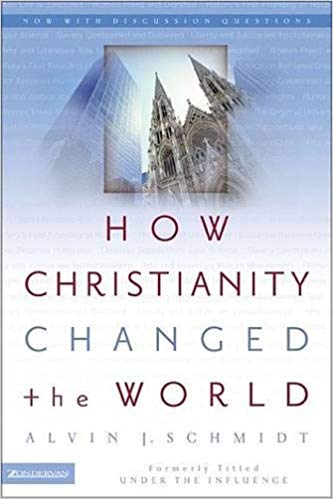 Well, then, if the Bible doesn’t recommend socialism, does it recommend capitalism, or an economic system relying on the free market? We can’t answer this question with a simple, unqualified yes or no, but an objective answer will tilt strongly in the affirmative direction. Perhaps Alvin Schmidt, a former sociology professor, says it best in his book How Christianity Changed the World.
Even though Christianity does not espouse a given economic ideology, it would be quite erroneous to conclude that therefore [just] any economic ideology is compatible with Christian values and beliefs. Such a conclusion, however, is often made, especially by those who look favorably upon socialism.5,6
Schmidt continues, observing that many Christians mistakenly believe the activities of the early church included socialistic practices. He says they forget three important things. While we highlighted these and other items in the article we cited at the beginning, Dr. Schmidt’s observations provide a quick overview for those who may not yet be familiar with why the practices of the early church as described in Acts 2:44-45 and 4:34-35 can’t be called socialism.
First, not everyone in the early church sold his or her property. Mary, Mark’s mother, owned a house, as did Simon, a tanner who lived in Caesarea (see Acts 12:12; 10:32). Also, Peter, a primary leader in the early church, explicitly affirmed one’s personal freedom to sell or to keep one’s property (see Acts 5:1-11, especially verse 4.)
Second, contributions to meet people’s needs in the church were made voluntarily. They were not forced. Indeed, had they been forced, they would not have been contributions at all, but payments. The government was not involved. Here Schmidt emphasizes something extremely important. He says, “[B]ehavior that is forced, no matter how noble its objective, is no longer Christian. This point is all too often overlooked today, even by many Christians.”7
Behavior that is forced, no matter how noble its objective, is no longer Christian.
—Alvin J. Schmidt—
Third, Jesus extended to people the invitation to follow Him, but He never coerced them to do so.
- At a point in Jesus’ ministry at which the Master was losing followers, Jesus did not run after those who were departing and beg them to return. Rather, He turned to His closest followers and asked, “Do you also want to go away?”
- When Jesus instructed ten lepers to report to the priests, all were healed, but just one came back to thank Him. Jesus didn’t call the other nine back and require them to express appreciation.
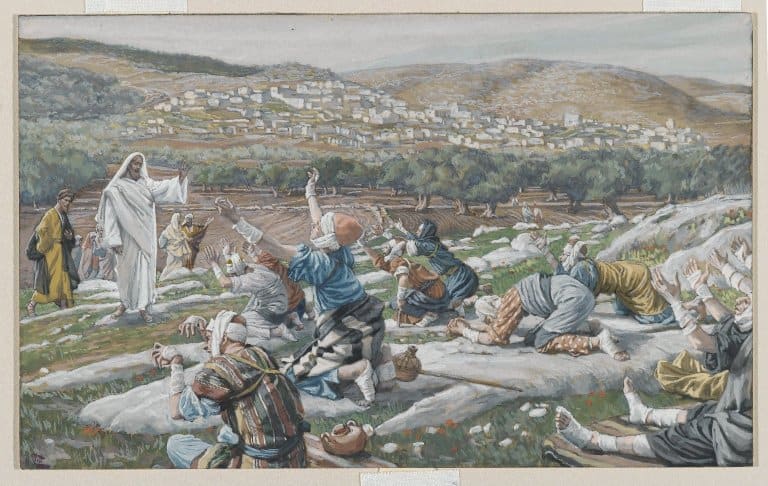
James Tissot, The Healing of the Ten Lepers
- In Matthew 23:37, Jesus lamented, “O Jerusalem, Jerusalem, the one who kills the prophets and stones those who are sent to her! How often I wanted to gather your children together, as a hen gathers her chicks under her wings, but you were not willing!”
- Coercion never has been God’s way. In the beginning, the Lord gave Adam and Eve a choice to either obey or disobey Him, and they chose to disobey. They, and the rest of the human race as well, have suffered the consequences ever since. This notwithstanding, God honors the choices people make.
The Lord will go out of His way to give people opportunities to follow Him but consistently gives them freedom to decide for themselves.8
With respect to the third item, Dr. Schmidt makes these statements. Especially in our day, every believer needs to understand and affirm them.
Just as God does not want people to be coerced in spiritual matters, so too he does not want them to be coerced in earthly matters, for instance, in their economic activities. There is not a single reference in either the Old or New Testament in which God denies economic freedom to people, as in fascism, socialism, and communism (emphasis added).9
There is not a single reference in either the Old or New Testament in which God denies economic freedom to people, as in fascism, socialism, and communism.
—Dr. Alvin J. Schmidt—
Therefore, socialism and its relatives, communism and Marxism, are incompatible with biblical teaching. We can say this about fascism as well.
Next time, we’ll begin examining the biblical “framework of freedom” to which Dr. Schmidt alludes, and we’ll explore just how well it supports a free market economy. You might be surprised.
Even if you aren’t, you’ll still want to return.
Part 2 is available here.
Copyright © 2020 by B. Nathaniel Sullivan. All rights reserved.
Unless otherwise indicated, Scripture has been taken from the New King James Version®. Copyright © 1982 by Thomas Nelson, Inc. Used by permission. All rights reserved.
Notes:
1Jeff Myers and David A. Nobel, Understanding the Times: A Survey of Competing Worldviews, (Manitou Springs, CO: Summit Ministries, 2016), 100.
2Ibid.
3Ibid.
4Ibid.
5Alvin J. Schmidt, How Christianity Changed the World, (Grand Rapids: Zondervan, 2004), 204-205.
6As an aside, we need to acknowledge that increasingly, conservative churches have been infiltrated by Marxist philosophy, the social justice narrative, and a corresponding push to accept a socialist approach to helping the poor and disadvantaged. We see this, for example, in the effort to broaden the definition of the term pro-life (go here and here).
7Schmidt, 205.
8Schmidt makes all three of these points on page 205 of his book.
9Schmidt, 205.
Comments (0)